The aim of this exercise was to help me explore colour translation in yarn design and explore textures with unexpected materials. Looking at the work I created in Part Three, I made some a range of colour chips in Exercise 3.1. Referring directly to this as well as the original textile sample sourced to create the colour chips, I made a series of yarn designs.


Starting with selecting one of my full colour palettes from 3.1. I chose to work from the bright and bold paisley print because it inspired me the most. I then had to gather some yarns, threads and ribbons as well as wire, feather and beads in order to create linear concepts that reflect the colours on the sample. There was three categories of yarn concepts that I had to explore and create:
- Colour Placement and Composition
- Materials Exploration
- Texture and Tonal Qualities
Colour Placement and Composition
This task was to translate the colour proportions from the printed textile into a yarn design. I chose to look at different sections of the sample when creating these yarns to include a variety of colours. I started with red ribbon and purple pipe cleaners. I wrapped the pipe cleaner around the red ribbon equal distance apart to create little balls and then I added thin black thread around each ball. I love the outcome of this one because it translate the colour and proportion of colour perfectly for the section of sample I was looking at.

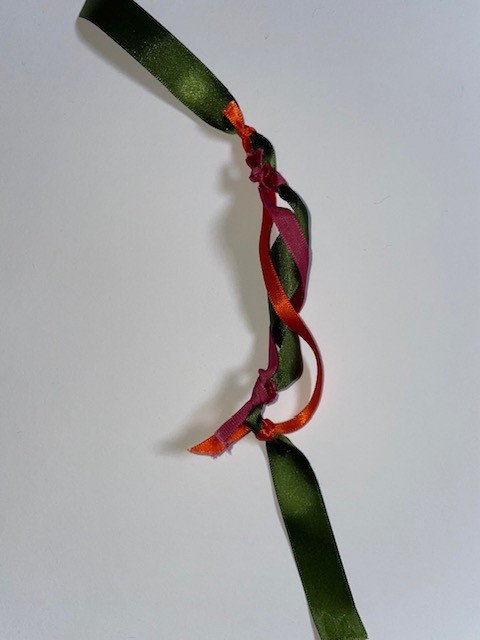
The next yarn I created focused on a different section of the sample. Using a dark green ribbon as the base yarn, I cut small pieces of red and orange to tie onto the green and then twist it around. Again, I am happy that it translate colour and proportion well.
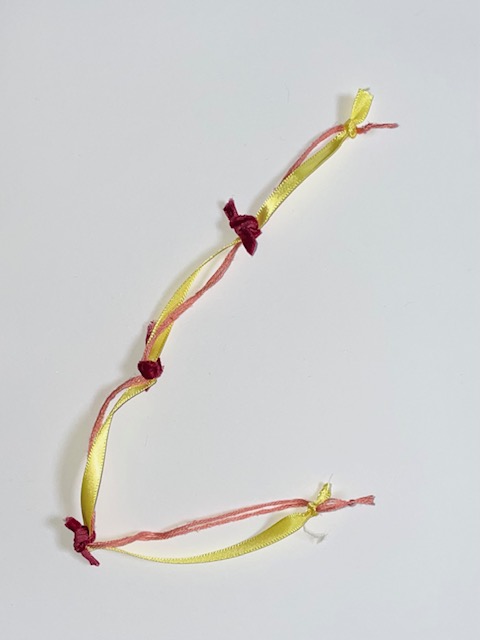
The final yarn for this category focused on another section. I used a light pink embroidery thread and doubled it over to make it thicker. I then added the yellow ribbon to it to translate the yellow outline of the pink flower. The red ribbon knots translate the red flowers inside the big pink flower. Im pleased with the outcome of this one but I think I could have made the pink thread thicker.
Materials Exploration
For this category, I had to develop a series of yarns that push the material and physical qualities of the yarns I design. I found a purple feather and decided to use that to translate the colour of the textile sample. I used twine as the base yarn and attached the feather to it using red ribbon. I then added blue and orange beads along the twine.

The brief suggests that if your textile sample has bright and garish colours, could children’s toys be an inspiration for the yarn designs. I found some small Lego pieces that matched the colours on the textile sample and drilled some holes through them to attach to yarn. Using a white thread as the base, I attached different coloured beads, orange pipe cleaners and these Lego pieces to create this colourful yarn.

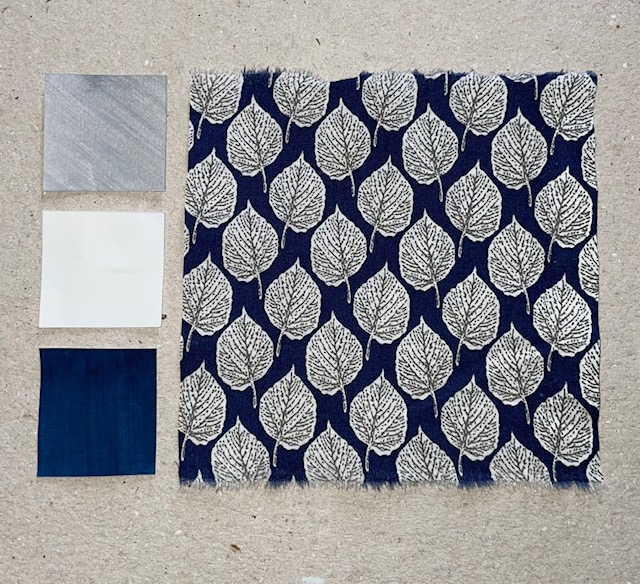
For the next yarn, I decided to use a different textile sample because I knew that I could expand my use of material exploration. I used some blue string that I found and made some leaf shapes out of clay. I then moulded them to the string and this was the outcome. I am pleased with how it looks and it clearly represents the textiles.

Texture and Tonal Qualities
For this category, I had to look at my neutral colour palette and textile sample. The first section was to focus on the tonal qualities of the chosen pieces. I used a grey t-shirt to tie into a large knot and then with the black t-shirt I tied a strip around the grey know. I made 5 of these and attached them to a white thread. I’m happy that I have translate the tonal qualities and even the colour proportion however I think the white should have been more prominent.

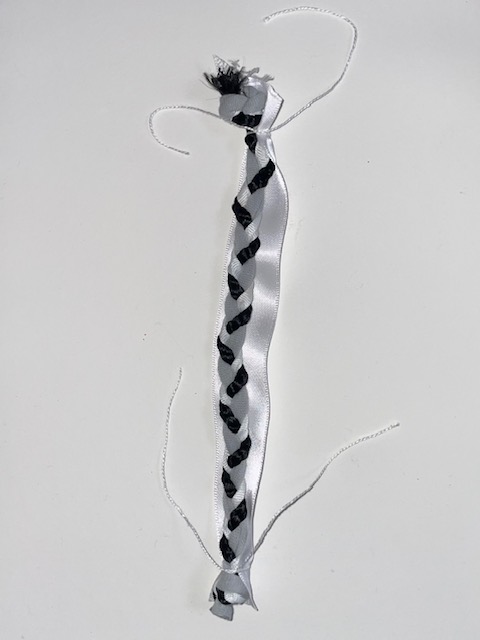
The second yarn I made was a simple grey white and black plait. Looking at the previous yarn, I added a large white ribbon to the back of the plait because there was more of the white than any other colour.
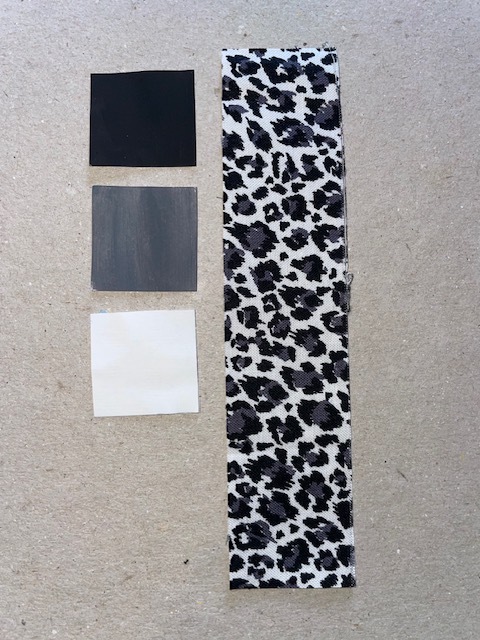
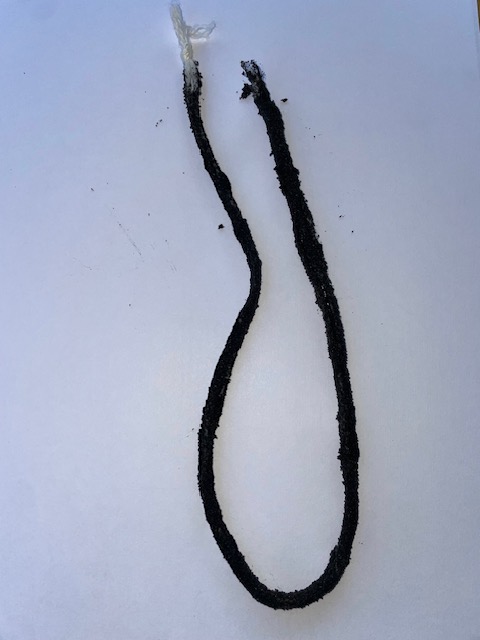
The next section was to focus on textured yarn exploration. I decided to use the other neutral colour palette and textile as I felt I could get a better exploration with this. Looking at this textile, my first thought was grainy. I thought how can I create a grainy looking yarn and I experimented with sand. I mixed black paint and sand together and coated a plain white yarn in glue. I then dragged that yarn through the black sand so it sticks and this was the outcome. I believe it was successful because it translates the colour and it is textured.


The second textured yarn I made was with thin wire. I found some silver and black wire in my house and tried to make a yarn with this. When looking closely at the yarn, you can see the stitching it almost like a zigzag pattern so I wrapped the thin wire around a skewer stick to create a spring. I then squashed it to make it flat therefore looking like a zigzag. I made 3 silver and 2 black and tied them together to create this textured piece.

Overall this exercise was very fun for me. I felt like in the last exercise I was being too particular with my work whereas I loosened up a bit in this exercise and pushed myself out of my comfort zone. I enjoyed exploring all the different ways of creating yarns and I feel like it’s been successful throughout.

 A Journey Through a Creative Arts Degree